


From a Cramped Basement to the Global Throne: Why the BTS Journey is the Definitive Human Inspirational Story of our Time.

BTS DURING THE EARLY DAYS
By Lulu
March 31, 2026
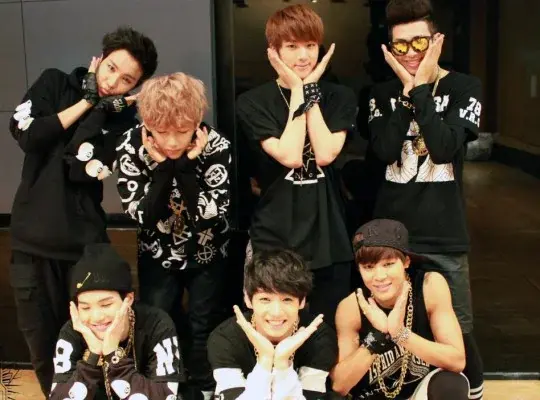
The image is a time capsule: Seven young men, eyes hidden behind dark lenses or framed by the heavy fringe of 2013 styling, standing in a formation that feels more like a defensive line than a pop group. Clad in the gold-and-black "Hip-Hop Warrior" aesthetic of their debut era, they look like they are preparing for battle. And in many ways, they were.
Today, as BTS marks their 2026 return with the record-breaking Arirang, moving a staggering 641,000 units in a single week and surpassing industry titans like Drake and Harry Styles, it is easy to forget that this global "Return to the Throne" was once an impossible dream. To understand why BTS matters, one must look past the stadium lights and into the grit of their beginning.
The Blueprint of a Different Kind of Group
In 2010, the K-pop landscape was defined by "perfection." Into this world stepped Bang Si-hyuk, a producer who envisioned a radical departure: a group that wasn't just polished, but human. He didn't want carbon-copy idols; he wanted storytellers.
The foundation was built on RM (Kim Nam-joon), an underground rapper with a philosopher's mind. Around him, six others joined to complete the puzzle: Jimin (Park Ji-min), the meticulous contemporary dancer; Jin (Kim Seok-jin), the charismatic aspiring actor; j-hope (Jung Ho-seok), the high-energy street dancer; SUGA (Min Yoon-gi), the resilient struggling part-time worker; V (Kim Tae-hyung), the soulful "secret" creative; and Jungkook (Jeon Jung-kook), the 15-year-old multi-talented prodigy.
The Crucible: 15-Hour Days and One Small Room
The "glamour" of their early years was a myth. The reality was a single, cramped bedroom shared by seven growing men and training sessions that stretched into 15-hour marathons of physical and vocal exhaustion. While the world doubted them, calling them "dirt-spoon idols" who would never make it in a saturated market, they were busy forging a bond that would become their greatest weapon.
Their 2013 debut was modest. The industry didn't take them seriously. They were rejected from variety shows and edited out of broadcasts. But while they were being ignored by the gatekeepers, they were being heard by the people.
The Turning Point: Authenticity as a Radical Act
BTS did something unheard of in the early 2010s: they spoke the truth. While others sang of idealized love, BTS tackled the "N.O" era pressures of the education system, the crushing weight of societal expectations, and the raw reality of mental health and burnout.
They didn't just perform; they shared their lives. Through early social media and raw, self-produced lyrics, they invited the world into their struggles. They showed their tears, their mistakes, and their anxieties. This vulnerability created ARMY, a global community that didn't just like their music, they felt seen by it.
The Global Shift: More Than Music
Their rise was never "overnight." It was a slow, relentless climb built on consistency. They moved from small theaters to arenas, then to sold-out stadiums like Wembley and SoFi. They became the first Korean act to top the Billboard 200 (now seven times over), addressed the United Nations, and visited the White House.
But their success matters because of what it represents. BTS is the living proof that your background does not define your future. They proved that a group singing in their native Korean could touch hearts in London, Sao Paulo, and New York. They broke the "Western-centric" ceiling of the music industry not by conforming, but by being more themselves.
The Legacy: The Art of Becoming
As we look at the seven men in that 2013 debut photo, we see the seeds of the legends they have become. The "Bulletproof Boy Scouts" have evolved into the ambassadors of the Arirang era, but that core of resilience remains unchanged.
The BTS story matters because it is a universal map for the marginalized. It is a reminder that growth is a painful, beautiful, and collective journey. They didn't just rise to the top; they fought their way there, hand-in-hand, refusing to leave anyone behind.
In 2026, BTS isn't just leading the industry; they are redefining what it means to be an artist in the modern world. Their story is a testament to the fact that when you speak your truth, the whole world eventually listens.
Join the Conversation
This is just the beginning of our deep dive into BTS and each member's journey. Over the next few days, I will be sharing the individual "Evolution Stories" of each member, from their 2010/2013 roots to their 2026 legacy. You won't want to miss these! 💜
We want to hear from YOU:
What does BTS mean to you personally? Is there a specific song, thing about them or moment that made you fall in love with the Tannies? Let’s turn the comments into a purple ocean!
Follow for more BTS 2026 Updates & Stories:
📸 Instagram: @lullumag
👥 Facebook: Lumagazine
🌐 Web: www.lulumagazine.net


#Lumagazine #LumaFashion #TheLumaEdit #LumaStyleGuide #LumaRunway #LumaTrends #GlobalStyle #LumaExclusive #HighFashionInspo #RunwayReady #BTS #BTS_ARIRANG #2013vs2026 #BangtanSonyeondan #RM #Jin #SUGA #jhope #Jimin #V #Jungkook #BTSARMY #KpopHistory #ArirangEra #ReturnOfTheKings


Comments